Some of the things I build start with a recurring conversation at home. One was about screen time. Another was the question we keep asking while looking at houses: could we live there?
Before YouTube, Breakfast
We weren’t trying to ban our daughter from her devices. We wanted her to make a few responsible choices before brainrotting her way through YouTube Shorts.
I wanted a way to connect screen time to things that needed doing first. Before 7:30 in the morning, that might mean asking, “Have you eaten breakfast yet?” Later in the day, it could be a math problem. The idea was to give her some responsibility for getting access, while making requests easy for us to handle.
Asking from her own device
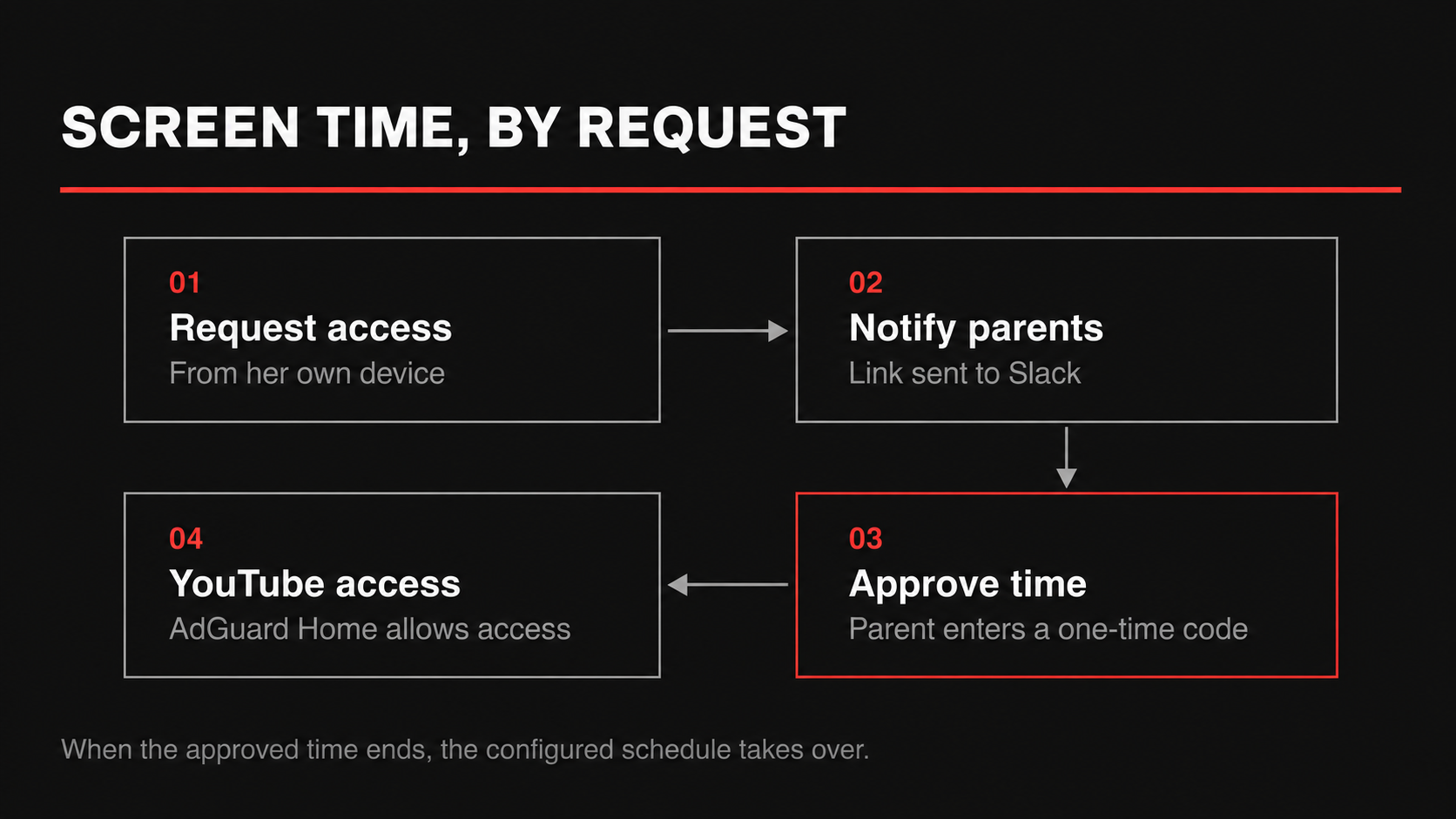
I designed a system we could use to let her request internet access from a local page on her device. It supported questions before submitting a request, then sent a notification to our parents’ Slack channel. My wife or I could follow the link and enter a one-time code to authorise access.
Making usability dead simple was was a big part of the project. I find a lot of parental-control apps cumbersome. I wanted either of us to be able to approve a request without digging through settings, signing in, changing schedules, etc.
I also wanted our daughter to be able to simply initiate the request herself. She could ask directly from her device, and we had a record of the request and our response. That was much easier to manage, than hearing “DAD, CAN I HAVE MORE SCREEN TIME?” shouted up from the basement.
Keeping track of the time
Behind the website, a Python application controlled network blocking through AdGuard Home. Approval temporarily removed the block for a chosen period. We could grant 15 minutes, a configurable duration that defaulted to 30 minutes, or access until the morning restriction window ended.
When an approval expired, the system returned to the configured schedule. We didn’t have to remember to go back into the settings and change it ourselves.
The interaction was what interested me most. Our daughter needed an easy way to ask, either parent needed an easy way to respond, and the system needed to keep track of what we’d agreed.
What If We Lived There?
We watch shows like House Hunters International and end up asking, “Could we live there?”
Looking into that meant visiting separate real-estate sites and then researching everything around the houses. Schools mattered to us, along with what the area was like and what it would cost to live there. I couldn’t find one place that brought together the information we cared about across different countries.
I wanted the whole thing to start with one command: give it a city.
So I built an application that used AI to research a location and assemble a profile. It brought together school information, neighbourhoods, weather, living costs, salary ranges, example property listings, and even what the visa process looked like. The listings and information would be organized onto a nicely laid out page that was easy to navigate, print, and look back on.
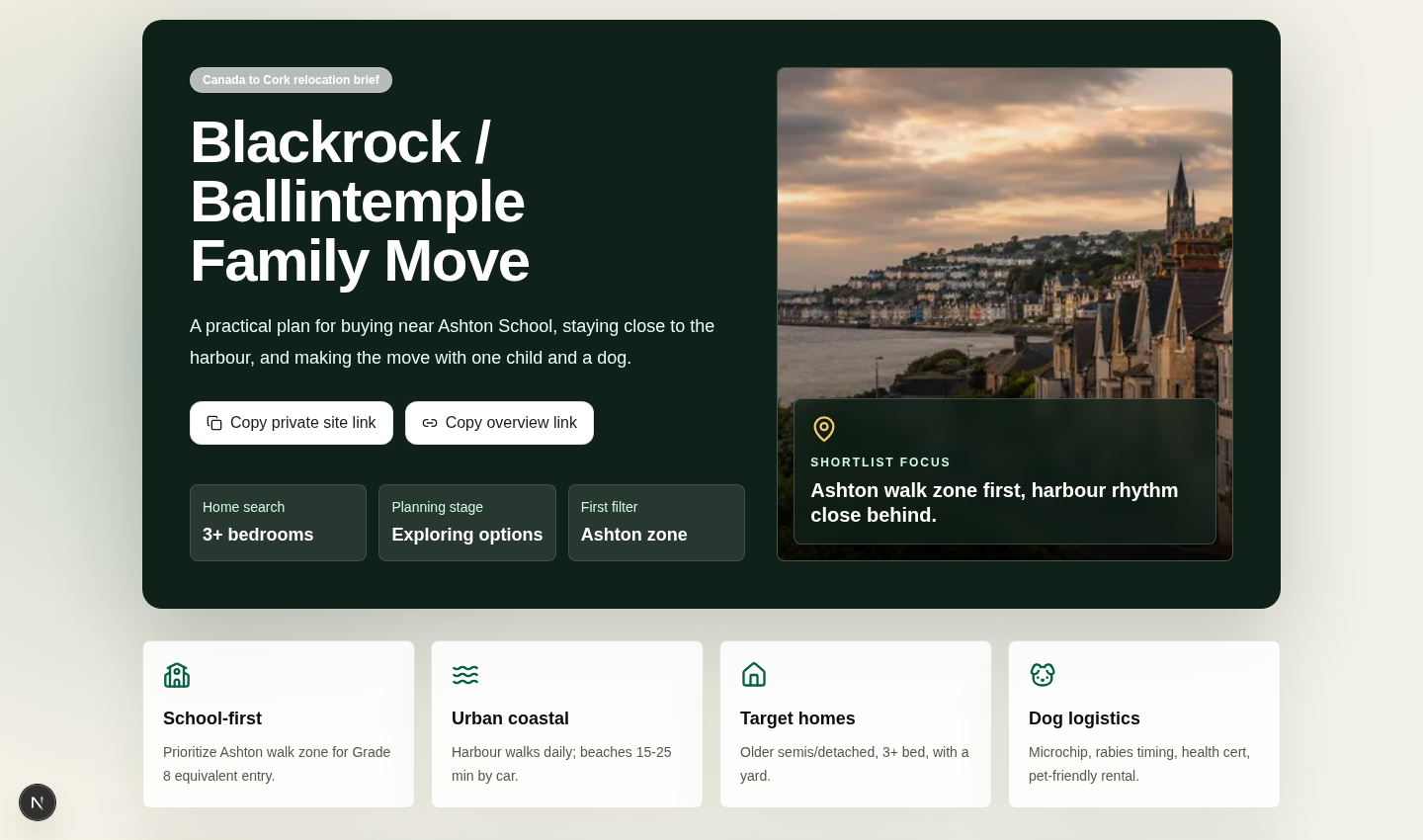
We use it a lot, mostly for fun, but you never know! If somewhere catches our attention in a TV show or article, we can look into it without turning the evening into a research project. It’s much faster than gathering everything separately, and we can save places to come back to later.
When we want newer information, the app can research an update and show us the proposed changes and sources before we apply them.
That’s the convenience I wanted: hear about somewhere, enter the name, and have enough information to start a proper conversation about whether it might suit us.
Neither project is exactly changing the world, but both get a lot of use. These are the kinds of problems I like solving. Whenever I’m doing something repetitive, part of my brain is already working out how to make it easier. Time is precious, and I want technology to give me more of it.